
Word Champs
SIA FuflaWord
4.4122.00 Reviews
- Version
- 10.6.04
- Installs
- 10.00K
- Age Rating
- Everyone
Screenshots
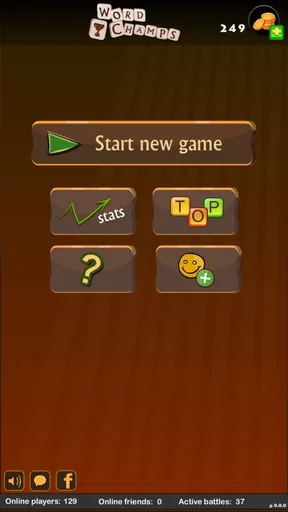
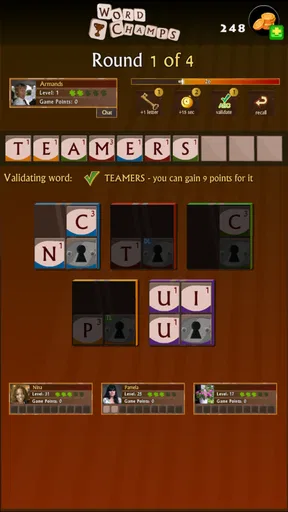
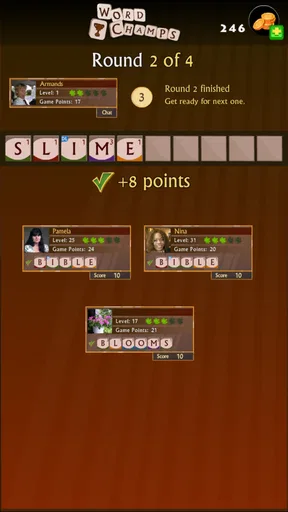
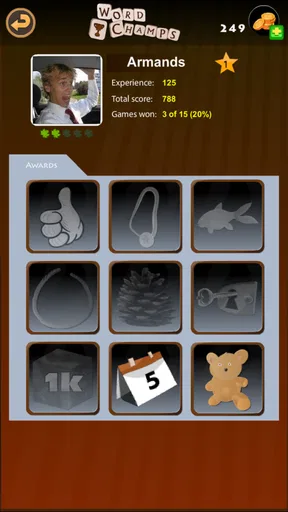
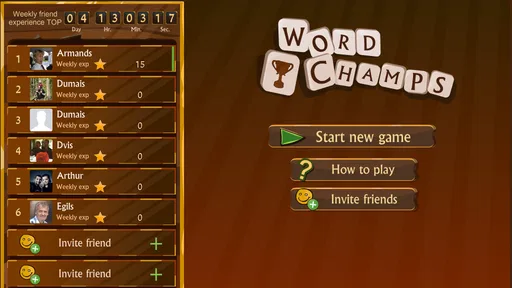
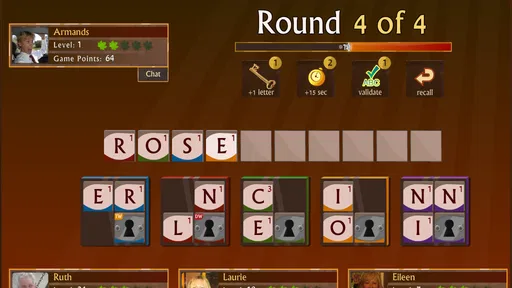
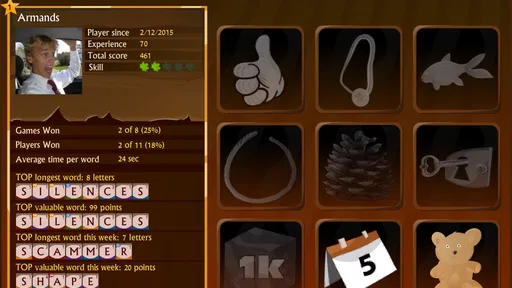
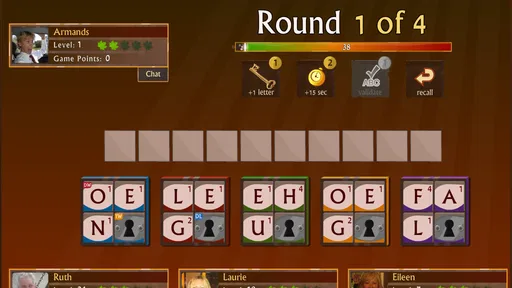
Our Review of Word Champs
 Analysis by Appyee
I like word games that ask me to think quickly without turning a short break into a serious study session. Word Champs fits that space well: it is a free word game from SIA Fufla built around real-time play and a noticeable strategic element. Instead of treating vocabulary as a quiet solo exercise, it makes word choice feel like a decision under pressure. That difference is the main reason I would recommend trying it, although it also explains why the game will not suit everyone.
My first question with a game like this is not simply whether it is entertaining. I want to know what kind of attention it demands, whether a new player can understand its appeal quickly, and whether it remains useful after the novelty of the first sessions fades. I also look at how it compares with familiar word-game alternatives: relaxed puzzle apps, daily guessing games, crossword-style titles, and competitive vocabulary games. On those points, this one has a clear identity. It is best for someone who wants wordplay with urgency rather than a completely calm, turn-free experience.
How to decide whether this word game fits you
The most important decision criterion is your preferred pace. If I am looking for a game I can pause constantly, solve with no pressure, or play while half-watching a television show, a traditional crossword or a leisurely anagram app is probably a better match. Word Champs makes more sense when I am ready to focus on the board, react to another player, and accept that a good word is not always the best move if it costs too much time or gives up a better opportunity.
The second criterion is whether you enjoy competition that depends on judgement rather than pure speed. The real-time format gives every word a tactical weight. I am not only asking, “Can I find a word?” I am also asking, “Should I use this option now?” That small change makes the experience more interesting than a simple vocabulary test. A player with a broad word bank may still lose a round by choosing poorly, while a player who spots practical opportunities quickly can stay competitive without knowing every obscure term.
The third criterion is tolerance for a learning curve. Word games often look simple because their basic action is familiar: make or recognize words. The difficult part is learning how the particular game rewards timing and decision-making. I would give it several sessions before deciding whether it is for me. The first match may feel more like an introduction to the rules than a fair test of long-term enjoyment, especially if I am still figuring out how aggressively to play.
It is also worth considering the setting in which you expect to use it. For a short commute, a waiting room, or a quiet evening, the game can provide a focused mental break. In a noisy environment, however, real-time play may feel less comfortable than a turn-based alternative. I would not choose it for moments when I need to stop and start repeatedly, because interruption can make a strategic game feel unnecessarily frustrating.
What the real-time format changes
Real-time word play changes the value of patience. In a solo puzzle, I can stare at the screen until a solution appears, and there is no cost beyond boredom. Here, hesitation becomes part of the challenge. I have to recognize when a modest move is safer than waiting for a brilliant one. That creates a useful tension: vocabulary helps, but timing and risk management decide how that vocabulary is used.
One practical habit I found helpful is to separate “certain” words from “hopeful” words. If I see a reliable move, I treat it as an anchor rather than holding everything back for a perfect possibility. Then I can look for a stronger option without allowing the search to consume the whole opportunity. This is not a feature advertised in a short store description; it is the kind of playing habit that makes the difference between feeling overwhelmed and feeling in control.
Another useful approach is to watch the shape of the available choices instead of focusing on one attractive word. A player who is always hunting for the longest or most impressive answer may miss a safer route. I get more consistent results when I think in terms of board access, timing, and what I can realistically identify under pressure. That makes the game feel strategic in a genuine way rather than simply fast.
Where the game wins over slower word apps
The strongest part of Word Champs is its combination of vocabulary and immediate decision-making. Many word games are excellent at relaxation, but they do not create much urgency. Others emphasize daily routines or one carefully designed puzzle. This game appeals to me when I want repeated interaction and the feeling that each choice matters right now.
That makes it particularly suitable for players who enjoy friendly rivalry. I can imagine using it with someone who likes language but does not want a long board game or a complicated strategy title. The rules are easier to approach than those of a large tabletop word game, while the real-time structure adds enough pressure to keep a match from becoming passive.
It also works for vocabulary practice in an informal sense. I would not treat it as a language course, dictionary, or systematic learning tool. Still, repeated exposure to word patterns can make me more alert to prefixes, endings, short connecting words, and less obvious combinations. The benefit comes from active recall under pressure, not from lessons or explanations. That distinction matters if you are choosing it for educational reasons.
The game’s established presence is encouraging without being overwhelming. It carries an average rating of 4.4 from around 600 ratings, with more than 100 written reviews, and it has passed 10,000 installs. I read that as a sign that the concept has found a real audience, not as proof that every player will enjoy it. Ratings are most useful here as reassurance that the game is not an untested idea; the actual fit still depends on whether you like competitive word play.
Small strategies that make early sessions better
My first tip is to avoid judging your ability by the opening matches. Early losses can come from unfamiliarity with the pace rather than weak vocabulary. I would concentrate on learning the rhythm: scan first, identify dependable options, then decide whether a riskier move is justified. Trying to play at maximum speed immediately can create mistakes that teach very little.
My second tip is to build a personal mental shortlist of useful word shapes. Short words, common endings, and familiar letter groupings are valuable because they are easier to retrieve when attention is divided. This does not mean memorizing a huge dictionary. It means noticing which patterns repeatedly help you move from a blank screen to a playable option.
My third tip is to treat every match as information about your habits. If I lose because I wait too long, I need a faster fallback. If I make quick moves but fail to create enough value, I need to be more selective. That kind of self-review gives the game more depth than simply replaying until a win appears. It is also a good reason to keep sessions short enough that I can remember what went wrong.
A fourth insight is that the best player is not always the person with the largest vocabulary. Competitive word games reward retrieval speed, composure, and the ability to abandon an attractive idea. If you know many unusual words but struggle to choose under a clock, the game may expose that weakness quickly. Conversely, a player who stays calm and recognizes common structures can perform better than expected.
When another category may be the better choice
I would choose a crossword-style game instead if my main goal were a slow, clue-based experience. Crosswords give me room to reason through a theme, return to a difficult clue, and enjoy the construction of a puzzle. Word Champs is more immediate and reactive, so it cannot replace that reflective feeling. The choice depends on whether I want a contest of decisions or a longer conversation with a puzzle.
A daily guessing game may suit someone who prefers one shared routine and a clear stopping point. Those games often work well for people who want a brief ritual rather than repeated competitive sessions. Word Champs is a better fit when I want to play more than once and improve through practice, but that repeatable format may feel less satisfying to someone who values a single daily challenge.
An anagram or word-search app is likely preferable for children or casual players who need a gentler introduction. The Everyone content rating makes Word Champs broadly approachable, but an age rating does not tell me how demanding the pace will feel. A younger player who enjoys word discovery but dislikes pressure may have a better time with a solo alternative. The same applies to anyone using a word game to unwind before bed.
Large multiplayer word-board games may be better for players who want deeper planning, a more deliberate turn structure, or a richer long-term competitive system. I would not switch to one expecting the same immediacy. The trade-off is simple: Word Champs is easier to pick up for quick real-time play, while a more elaborate board-game-style alternative may offer greater strategic control at the cost of time and complexity.
There is also a practical limitation in the game’s central design. Real-time competition can magnify small moments of hesitation, distraction, or uncertainty. If you find losing because of timing more irritating than losing because of a difficult clue, you may prefer a game that separates thinking time from scoring. That is not a flaw in the concept, but it is a genuine reason to skip this one.
What to expect before installing
The game is free to download, which makes trying it straightforward. It includes in-app purchases ranging from $0.99 to $49.99 per item, so I would approach the optional spending carefully and decide in advance whether I want the free experience only. For a word game, I would not assume that purchasing anything is necessary to enjoy the basic idea. I would first play enough sessions to determine whether the real-time format itself has staying power.
The technical entry point is also fairly accessible. The current version is 10.6.04, and it requires Android 5.0 or later. That makes it relevant to people using older supported Android devices, although the experience will still depend on the phone and the surrounding situation. I would install it on the device where I am most likely to play focused matches, rather than treating it as a background app for constant multitasking.
The developer is SIA Fufla, and the game has been available since October 13, 2015. That long availability gives the concept some perspective: it is not presenting itself as a temporary novelty. At the same time, players who expect the visual polish, social layers, or constant content changes of a newer major release should keep their expectations measured. I see it primarily as a focused word-game experience, not as a broad entertainment platform.
One question many players have is whether strong English vocabulary is required. In my view, a large vocabulary helps, but it is not the only factor. Familiar words retrieved quickly are often more useful than rare words that take too long to identify. If you are learning English, the game may be enjoyable practice for recognition and recall, but I would pair it with a dictionary or structured learning app if accuracy and explanation are important.
Another question is whether it works for a casual player. Yes, provided “casual” means short sessions rather than completely relaxed pacing. You can approach it in small bursts, but the matches themselves still ask for attention. Someone who wants to play with one hand while doing something else may find the format demanding. Someone who wants a compact challenge during a break may find the same pressure energizing.
It is also fair to ask whether it is suitable for playing with friends. The competitive design naturally makes it appealing for friendly rivalry, especially between people who enjoy comparing vocabulary and reactions. I would recommend agreeing on the tone beforehand, because a fast word game can become surprisingly intense when both players care about winning. It works best when the competition remains playful rather than turning every mistake into a criticism.
Finally, should a serious puzzle fan choose it over a familiar favorite? I would not frame the decision as a replacement. I would add Word Champs when I want a different kind of mental workout: less contemplative than a crossword, less ritualized than a daily guessing game, and more immediate than a leisurely word search. Its value comes from that particular combination, not from trying to cover every style of word play.
The cost of changing your usual routine
Switching from a slower word game requires more than installing another title. I have to adjust my expectations about what counts as progress. In a crossword, progress may mean finally understanding a clue. Here, progress may mean recognizing a safe move sooner, avoiding unnecessary hesitation, or recovering after a poor choice. If I only measure success by wins, I may miss the skills the format is actually testing.
The mental cost is modest but real. A few focused matches can feel more tiring than a longer passive puzzle because I am constantly scanning and deciding. I would schedule it for moments when I can give the screen my attention. That simple change improves the experience and prevents the game from feeling unfair when the real problem is that I am distracted.
There is also a social adjustment. If I usually play alone, competitive real-time word play can feel exposed because mistakes happen immediately. I would begin with a relaxed attitude and use the early sessions to learn the flow rather than prove anything. If that pressure remains unpleasant after the novelty fades, a solo alternative is probably the better long-term choice.
On the financial side, the free entry reduces the risk of trying it, but the presence of optional purchases means I would still keep spending intentional. I would not pay simply to compensate for losing or impatience. First I would decide whether the underlying matches are enjoyable without extra commitment; only then would I consider whether any purchase adds enough value for my own habits.
My recommendation for different kinds of players
I recommend Word Champs to players who like vocabulary, quick decisions, and a little competitive tension. It is especially appealing if ordinary word searches feel too passive but complex board games feel too slow to organize. The game gives a short break a clear purpose: scan, choose, react, and learn from the result.
I would recommend it cautiously to language learners and families. The Everyone rating makes it broadly accessible, and the word focus can encourage useful recall. However, I would not present it as a teaching replacement, and I would pay attention to whether the real-time pressure motivates or discourages the particular player. A calmer educational app may be more suitable when explanation matters more than competition.
I would skip it if I want a completely pressure-free puzzle, a deep turn-based strategy system, or a structured language curriculum. I would also skip it if I know that rapid losses make me angry rather than curious. Those are not minor preferences; they go directly against the game’s central appeal.
For me, the deciding strength is the way it turns ordinary word knowledge into a series of tactical choices. I enjoy that I cannot rely only on knowing more words; I have to decide when and how to use what I recognize. The main weakness is the same feature: the pace can make the experience less comfortable for players who want time to reflect.
Overall, I think Word Champs is worth trying because it occupies a useful middle ground between casual word puzzles and more involved competitive games. It is free to start, broadly accessible, and focused enough to understand without a long commitment. My advice is to play several attentive sessions, use the early matches to learn your timing, and judge it by whether the pressure feels motivating. If you want word play that rewards quick thinking and strategy, this is a solid choice; if you want quiet solving, choose a slower alternative instead.
Verdict
Strengths of Word Champs
- Quick word rounds are ideal for short breaks.
- Competitive matches add motivation to keep playing.
- Simple controls make it accessible for most players.
- Different word challenges help prevent repetitive gameplay.
- Leaderboards provide extra goals for competitive users.
Limitations of Word Champs
- Some advanced features may require in-app purchases.
- Difficulty can feel uneven between consecutive rounds.
- Online play may be affected by a weak internet connection.
- Ads can interrupt the experience for free users.
- The game may offer limited appeal to noncompetitive players.
Other Releases by SIA Fufla
View All
Similar Picks in This Category
View All
Word Search - Word Puzzle Game
Bluetile4.8

Word Search Quest - Puzzles
Blackout Lab4.8

CodyCross: Crossword Puzzles
Fanatee, Inc.4.7

Words of Wonders: Crossword
Fugo Games4.9

Wordscapes: Word puzzle game
PeopleFun4.7

Word Search Explorer
PlaySimple Games4.9
Frequently Asked Questions
What is Word Champs, and how does the game work?
Word Champs is a competitive word puzzle game in which players test their vocabulary, spelling, and quick-thinking skills. After starting a match, you typically receive word-based challenges and must find valid answers within the available time or game rules. The competitive format makes each round feel more engaging than a traditional crossword or solo word game, especially when playing against other users.
Can I play Word Champs offline?
Word Champs is mainly designed around online gameplay and competitive matches, so an internet connection may be required for the full experience. Online access can be important for matchmaking, submitting answers, updating scores, and synchronizing progress. Some features may remain accessible without a connection, but users should not expect the complete multiplayer experience to work reliably in offline mode.
Is Word Champs free to download and play?
Word Champs can generally be downloaded without an upfront purchase, allowing users to try the core word challenges before deciding whether they want to continue playing. However, the app may include advertisements, optional purchases, or other monetized features depending on the platform and current version. It is worth checking the store listing and in-app purchase details before downloading.
Is Word Champs suitable for children and language learners?
Word Champs can be a useful choice for players who enjoy vocabulary games, spelling practice, and short educational challenges. Children may find the competitive format motivating, while language learners can use it to reinforce familiar words and discover new ones. Nevertheless, difficulty and vocabulary can vary, so younger players may need guidance, and parents should review the app’s age rating and online features.
Does Word Champs require an account, and is multiplayer safe?
Depending on the version and available features, Word Champs may ask you to create or connect an account to save progress, participate in multiplayer matches, or access rankings. Because online competition can involve usernames and interactions with other players, it is sensible to review the privacy settings and permissions before playing. Parents should also check whether chat or social features are available for younger users.
Play our best games!


